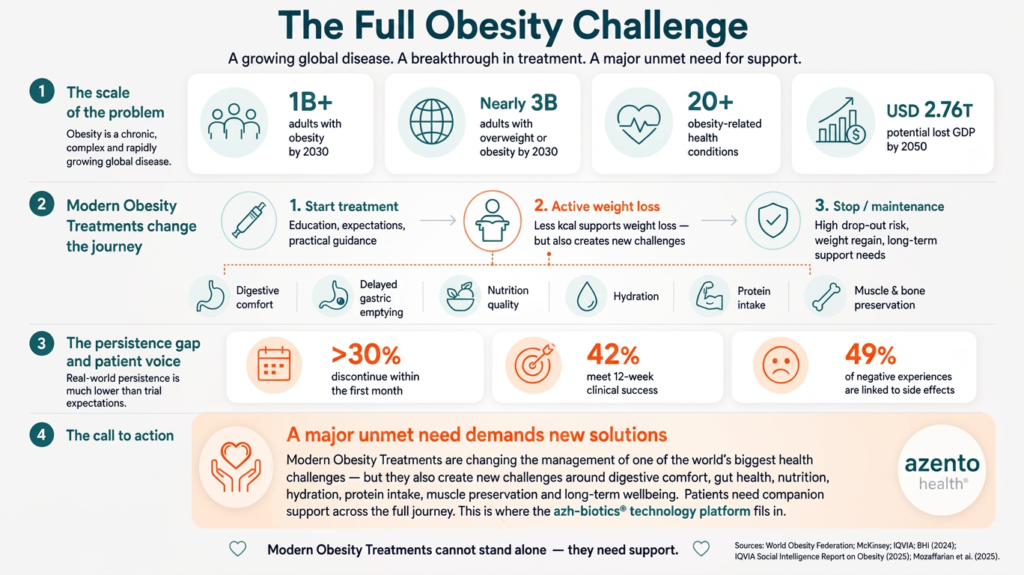
Today, nearly 1 billion adults globally live with obesity, and the number is projected to continue rising. The World Obesity Federation estimates that adult obesity will increase from 524 million adults in 2010 to 1.13 billion adults by 2030, while broader overweight and obesity are expected to affect nearly 3 billion adults by 2030.
The impact goes far beyond weight. Obesity is associated with more than 20 health conditions, including type 2 diabetes, cardiovascular disease, sleep apnea, osteoarthritis, liver disease and certain cancers. It also carries a major economic burden, with McKinsey estimating that obesity could cost the global economy USD 2.76 trillion in lost GDP by 2050.
At the same time, obesity care is entering a new era. GLP-1 and next-generation anti-obesity medicines are transforming what is possible in weight management, delivering clinically meaningful weight loss and important cardiometabolic health benefits. The global obesity medicines market has already become one of the fastest-growing areas in healthcare, with IQVIA reporting USD 66 billion in global obesity medicine sales in 2025 and forecasting growth toward USD 105–200 billion from 2027 and beyond.


The persistence challenge
Real-world data show that persistence can drop rapidly after treatment initiation. In the BHI issue brief (2024, “Real-World Trends in GLP-1 Treatment Persistence and Prescribing for Weight Management”, n = 169.250) shown here, more than 30% of users discontinued within the first month, and only 42% of users met the 12-week definition of clinical success. The report notes that the probability of staying on a GLP-1 drug drops sharply between zero and six weeks - meaning many patients discontinue before they have been on treatment long enough to experience meaningful clinical benefit.
The patient voice points to the same unmet need. In social listening data, 49% of negative experiences with modern anti-obesity medications were linked to side effects, ahead of cost concerns and access issues. For many patients, the challenge is not only whether these treatments work - it is whether they can tolerate them, stay on them in the “right way” and feel well in daily life. This creates a clear call to action: Support must start before treatment starts – and continue after!
A 2025 joint advisory, “Nutritional priorities to support GLP-1 therapy for obesity,” from the American College of Lifestyle Medicine, the American Society for Nutrition, the Obesity Medicine Association, and The Obesity Society highlights exactly these real-world challenges. The advisory identifies gastrointestinal side effects, reduced calorie intake, risk of nutrient inadequacy, muscle and bone loss, discontinuation and weight regain as key issues during GLP-1 therapy. It concludes that structured nutrition and lifestyle support before, during and after treatment is central to helping clinicians advance patient health.
The patient voice is also clear. Side effects are one of the most common reasons patients report negative experiences with modern anti-obesity medications. This creates an unmet need: patients need practical, accessible support that helps them feel better, tolerate treatment, maintain daily routines and stay engaged over time.
This is where a new category of companion support products is emerging. Patients need real solutions that fit naturally into the modern obesity-treatment journey - from treatment start, through active weight loss, and into long-term maintenance. These solutions should support digestive comfort, gut health, microbiome resilience, nutritional adequacy, hydration routines, protein intake, muscle preservation and long-term wellbeing.
The gut is central to this new support category. A 2026 review, “GLP-1 agonists and the gut microbiome: A bidirectional relationship,” describes the gut microbiome as an emerging frontier in GLP-1 and metabolic research. It highlights that gut microbes and their metabolites may influence GLP-1 secretion and metabolic signalling, while GLP-1 agonists may also reshape microbial composition - pointing to the importance of the host–microbe–drug axis in future metabolic care.
At Azento Health, we believe the future is bright. Modern Obesity Treatments are changing lives, and the next phase of obesity care will be about helping people achieve better long-term outcomes - not only in weight loss, but in health, wellbeing and daily quality of life.