GLP-1 and next-generation obesity medicines are transforming weight management. They can deliver clinically meaningful weight loss and important health benefits, partly by reducing appetite and calorie intake. This lower calorie intake is central to weight loss – but it also creates new challenges around digestive comfort, nutrient adequacy, protein intake, hydration, muscle and bone preservation, and long-term maintenance.
Supporting the next phase of GLP-1 obesity care
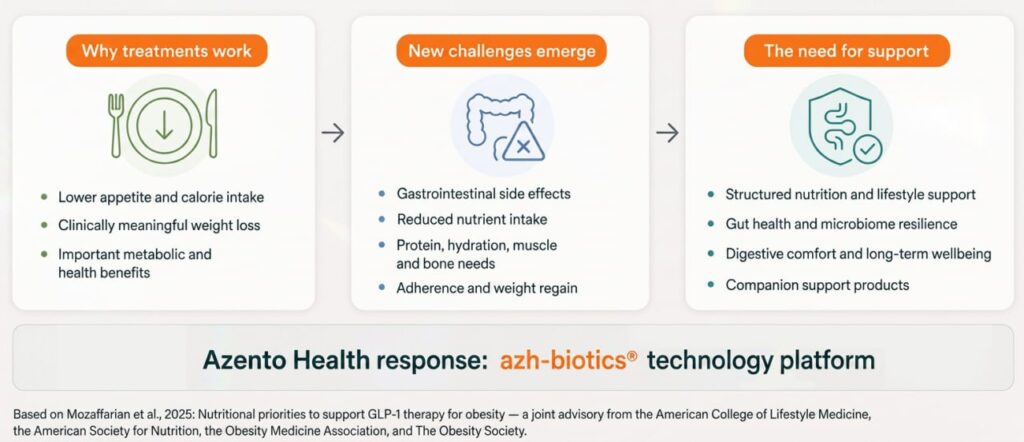
In the 2025 joint advisory “Nutritional priorities to support GLP-1 therapy for obesity”, the American College of Lifestyle Medicine, the American Society for Nutrition, the Obesity Medicine Association, and The Obesity Societyhighlight several key challenges during GLP-1 therapy: gastrointestinal side effects, reduced calorie intake, risk of nutrient inadequacy, loss of muscle and bone mass, treatment discontinuation and weight regain. The advisory concludes that structured nutrition and lifestyle support before, during and after treatment is central to helping clinicians advance patient health.
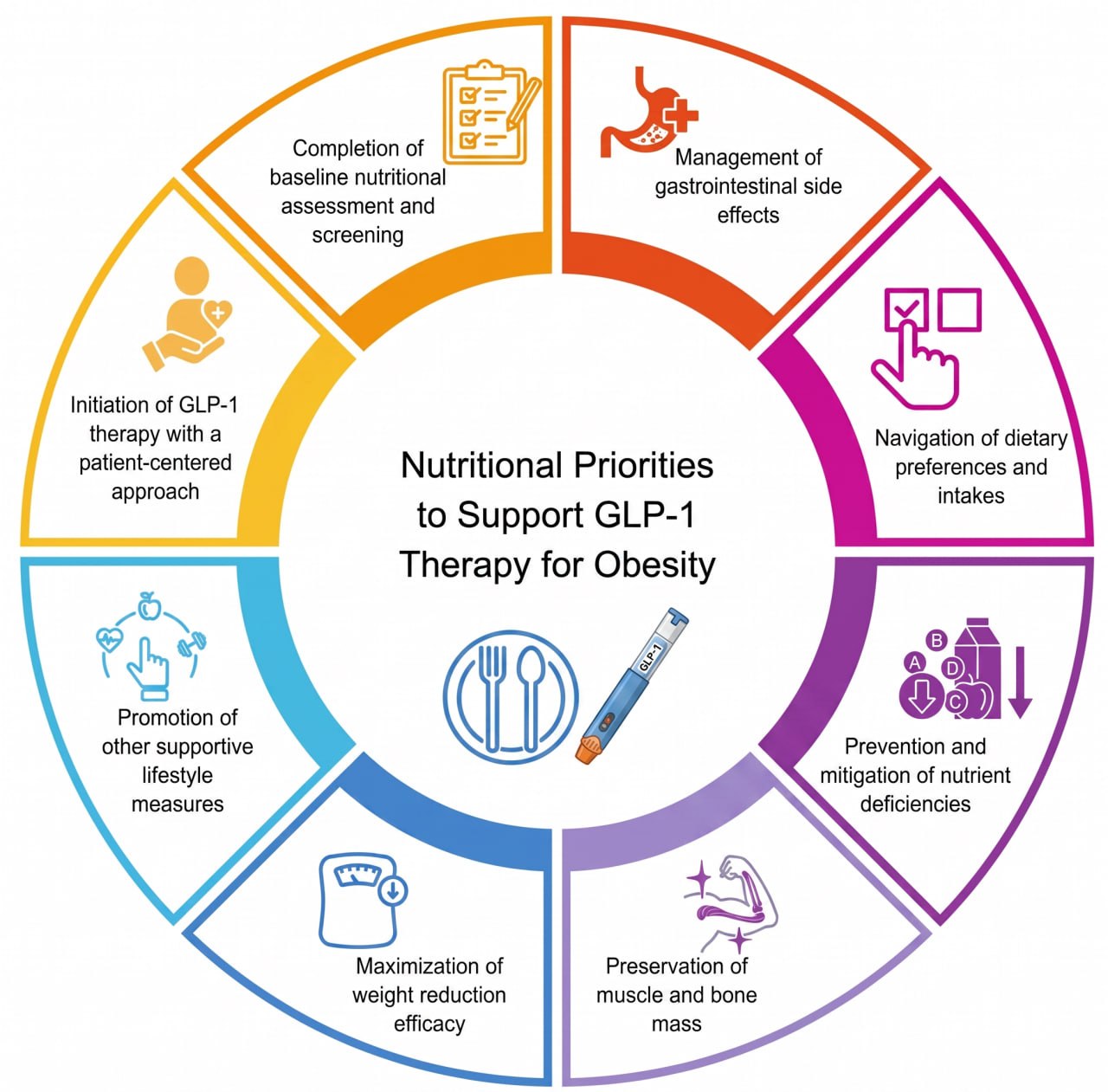
Key elements of nutritional priorities to support GLP-1 therapy for obesity.
At Azento Health, this is where we see the need for a new generation of companion support products. Our azh-biotics® technology platform is designed to support the gut-health and nutrition-related needs emerging around Modern Obesity Treatments – with a focus on
Rapid weight loss and changes in dietary patterns associated with weight loss therapy can have profound effects on the gut microbiome, which in turn can influence the efficacy of the treatment and overall health outcomes (Seganfredo et al., 2017).
Studies have shown that the gut microbiome composition changes significantly during GLP-1 therapy, with an increase in beneficial bacteria like Akkermansia muciniphila (Zhang et al., 2018). However, rapid weight loss can also lead to reduced microbial diversity in the gut, potentially impacting metabolic health (Moschen et al., 2012).

To address these challenges, supporting gut health during GLP-1 therapy is crucial. Microbiome supplementation can help stabilize the gut microbiome during the dynamic period of weight loss, potentially enhancing the metabolic benefits of GLP-1 therapy (Koutnikova et al., 2019).
A balanced microbiome supports optimal nutrient absorption, which is particularly important during periods of reduced caloric intake (Roager and Dragsted, 2019). Additionally, a healthy gut microbiome can help mitigate the low-grade inflammation often associated with obesity, potentially enhancing the overall health benefits of weight loss (Cani et al., 2007).

Some studies suggest that a healthy gut microbiome may enhance the body's response to GLP-1, potentially improving treatment outcomes (Grasset et al., 2017).
Moreover, supporting gut health can help manage GLP-1-related gastrointestinal side effects, improving treatment adherence and quality of life (McFarland and Goh, 2019). By addressing these aspects of gut health, patients undergoing GLP-1 therapy may experience enhanced weight loss outcomes, improved metabolic parameters, better management of side effects, and potential long-term health benefits beyond weight loss (Dao et al., 2016).

While GLP-1 receptor agonists provide a powerful tool for weight management, supporting gut health through targeted supplementation can optimize treatment outcomes and overall well-being.
To enhance tolerability, improve quality of life, and promote better long-term outcomes, adjunctive treatments such as biotics have gained attention. These therapies support gut health, alleviate GI symptoms, and play a significant role in long-term metabolic health. While weight loss can bring many health benefits, it’s important to approach it in a healthy and sustainable way to minimize side effects. It is also extremely important to maintain the achieved effects of therapy in the long term.

Read more about the challenge
Go to page →
Read more about the science and technologies
Go to page →